
Setting 2026 SMART Goals?
- Holly Hartman
- Dec 27, 2025
- 4 min read

Start With Collaboration Clarity Under Pressure
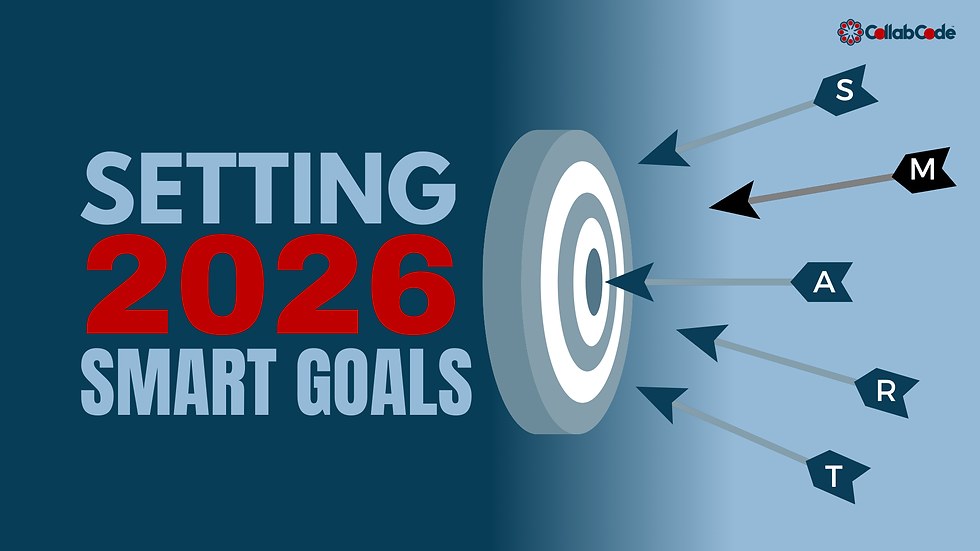
If you’re setting SMART goals for 2026, you’re likely focused on outcomes: revenue, delivery, growth, efficiency, retention.
What often gets missed is this question:
Do our teams have the collaboration capacity to hit those goals under pressure?
Most teams don’t fail because they lack talent or ambition. They fail because decision-making, communication, and focus break down when stakes are high.
From a CollabCode™ perspective, that breakdown shows up as:
Decisions made quickly but not clearly
Alignment assumed instead of confirmed
Priorities competing instead of reinforcing
Pressure amplifying friction rather than performance
If any of that sounds familiar, the issue isn’t effort. It’s collaboration design.
Why Collaboration Belongs Inside Your 2026 SMART Goals
SMART goals are meant to be:
Specific
Measurable
Achievable
Relevant
Time-bound
But collaboration goals are often vague:
“Improve communication”
“Work better cross-functionally”
“Reduce friction”
Those aren’t SMART. They’re aspirational.
CollabCode™ reframes collaboration as a set of skills that can be developed, measured, and reinforced—especially under pressure.
That’s where this reading bundle comes in.
The 2026 Reading Bundle for High-Pressure, High-Stakes Teams
This bundle is designed for teams who:
Move fast
Make frequent decisions
Operate under real consequences
Can’t afford rework, misalignment, or quiet resistance
The Three Books
Together, these address the three collaboration pressures most teams face in 2026:
Speaking clearly when stakes are high
Making decisions others can align with
Maintaining focus amid constant urgency
Why These Books, and Why Now

1. Pressure Is No Longer Seasonal
Teams are no longer in cycles of “crunch then recover.” Pressure is continuous.
Crucial Conversations gives teams shared language for navigating high-stakes moments without silence, avoidance, or force—three patterns that quietly undermine performance.
From a CollabCode™ lens, this strengthens:
Communication
Conflict Resolution
Emotional Intelligence
All of which are critical when goals are ambitious and timelines are tight.
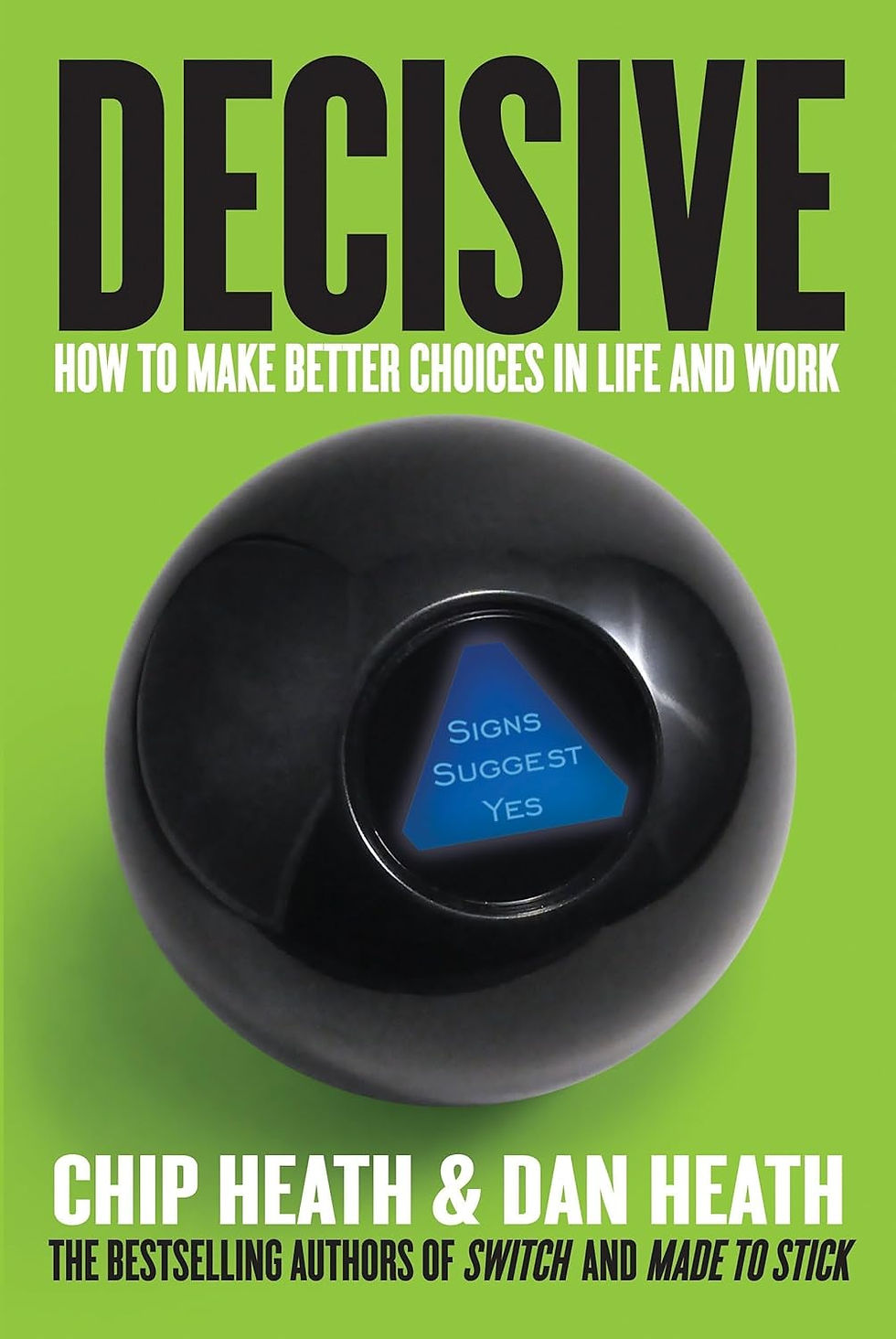
2. Decisions Are the New Bottleneck
Many teams aren’t slow because they can’t decide. They’re slow because others don’t understand how decisions were made.
Decisive helps leaders and teams:
Make reasoning visible
Distinguish between options, criteria, and tradeoffs
Reduce second-guessing and downstream resistance
This directly supports SMART goals that depend on:
Faster execution
Cross-functional alignment
Reduced rework
From a CollabCode™ perspective, this strengthens:
Critical Thinking & Problem Solving
Accountability & Reliability
Communication

3. Focus Is a Collaboration Problem, Not a Personal One
When everything is urgent, teams burn energy instead of making progress.
Essentialism helps teams:
Clarify what actually matters
Eliminate non-essential commitments
Protect capacity for high-impact work
This isn’t about doing less. It’s about aligning effort to purpose, which is foundational to collaboration.
From a CollabCode™ lens, this strengthens:
Purpose Alignment
Adaptability
Accountability & Reliability
What Might Be True About Your Team Right Now
If you’re honest, one or more of these may already be showing up:
Meetings end with decisions, but not alignment
Team members execute, then quietly redo work
People feel busy but not effective
Conflict is either avoided or escalates quickly
Leaders feel pressure to “just decide” to keep things moving
None of these indicate a bad team.
They indicate collaboration under strain.
Turning This Reading Bundle Into SMART Collaboration Goals
Here’s how informed leaders translate these books into real SMART goals for 2026.
Example SMART Goal 1:
Decision Clarity
Specific: Define decision modes (input, recommendation, decision) for all cross-functional projects
Measurable: 90% of project leads use decision framing in kickoffs and reviews
Achievable: Supported by shared language from Decisive
Relevant: Reduces rework and resistance
Time-bound: Implemented by Q2 2026
Example SMART Goal 2:
Productive Conflict
Specific: Train teams to surface and resolve task-level conflict early
Measurable: Reduction in escalations and post-decision reversals
Achievable: Supported by Crucial Conversations frameworks
Relevant: Improves trust and execution under pressure
Time-bound: Practiced consistently by end of Q3 2026
Example SMART Goal 3:
Focus and Capacity
Specific: Eliminate or redesign the bottom 20% of low-impact work
Measurable: Fewer competing priorities per team
Achievable: Guided by Essentialism principles
Relevant: Prevents burnout and misalignment
Time-bound: Completed by annual planning cycle
The CollabCode™ Advantage
What makes this approach different is that it:
Treats collaboration as a skill system, not a personality issue
Aligns reading with behavioral change, not inspiration
Gives leaders language to talk about friction without blame
This bundle doesn’t replace your strategy or goals. It supports your ability to execute them together.
If You’re Leading Teams in 2026
You don’t need your teams to work harder. You need them to work with more clarity under pressure.
Starting with these three books creates:
Shared language
Shared expectations
Shared responsibility for collaboration
That’s how SMART goals become achievable—not just aspirational.

About the Author
Holly Hartman is the founder of CollabCode™ and a collaboration strategist who helps leaders and teams turn friction into forward momentum. Her work focuses on how people actually collaborate under pressure—across decisions, conflict, capacity, and execution—rather than how collaboration is supposed to work in theory.
With a background spanning community leadership, organizational strategy, and applied collaboration design, Holly works with team leads, managers, and executives who are setting ambitious goals and need their teams to execute without burnout, rework, or erosion of trust.
CollabCode™ was created to give leaders a practical, skill-based language for collaboration—one that supports clarity, accountability, and sustainable performance in real-world conditions.
Turn This Into a Team Conversation
If you’re setting SMART goals for 2026, one of the most effective things you can do is have your team take the CollabStyles™ Quiz together.
Rather than guessing how people respond to pressure, decisions, and focus, the quiz gives your team a shared language for collaboration under stress.
👉 Have your team take the free CollabStyles™ Quiz: https://www.thecollabcode.com/collabstyles-quiz
Plan to review results together and ask:
Where do our styles help us under pressure?
Where do they create friction?
Which collaboration skills matter most for our 2026 goals?
That single conversation often reveals more than months of status meetings.
Turn This Into a Team Conversation
Visit www.thecollabcode.com
Click the book image for direct links. Some book links may be affiliate links. If you choose to purchase through them, it helps support the ongoing development of CollabCode™ resources — at no additional cost to you.

Comments